Things to Do in Buenos Aires Argentina for First-Time Visitors
The top things to do in Buenos Aires Argentina are touring Recoleta Cemetery and Teatro Colón, browsing the Sunday San Telmo market, photographing Caminito in La Boca, watching tango and eating steak at a parrilla. Plan on at least 3 full days. Sights work best grouped by neighborhood, and the day-specific markets should line up with your calendar so you don’t miss them.
Key Takeaways
- Recoleta Cemetery, Teatro Colón, San Telmo, La Boca and Palermo cover the core Buenos Aires attractions for a first trip.
- The Feria de San Telmo street market runs on Sundays, so a Buenos Aires trip should include one Sunday in the city.
- US citizens visiting Argentina for tourism don’t need a visa for stays of up to 90 days.
- Argentina changes its currency rules often, so US travelers should compare credit card and cash rates right before departure.
- Dinner in Buenos Aires starts around 9 p.m. or later, and milongas (tango dance halls) run past midnight.
- Three days cover the city highlights, and 2 extra days allow a trip to the Tigre Delta or Colonia del Sacramento, Uruguay.
What Is Buenos Aires Best Known For?
Buenos Aires is Argentina’s capital, a port city that is best known for tango, European-style architecture, grass-fed steak, Malbec wine and passionate football culture. Locals go by porteños. They dine late and keep cafés full at all hours, treating each of the city’s 48 barrios as a distinct community.
Wide boulevards lined with ornate balconies and French-inspired mansions earned Buenos Aires its famous nickname, the “Paris of South America.” Its culture runs deeper, though. Waves of Italian and Spanish immigrants shaped what porteños cook and play, and their influence still colors the local accent.
Start with two things. On a first visit, put Recoleta Cemetery and an evening of tango at the top of your list, since together they show the city’s history and its living culture in a single day.
Most lists of the best things to do in Argentina Buenos Aires open with these classics, and they’re right to. A better trip goes further. Add neighborhood walks and a long steak dinner, then fit in at least one day-specific market.
Best Things to Do in Buenos Aires Argentina
The best things to do in Buenos Aires Argentina are visiting Recoleta Cemetery, touring Teatro Colón, walking Plaza de Mayo, shopping the San Telmo market, photographing Caminito and browsing El Ateneo Grand Splendid. A few more earn a spot. Palacio Barolo and MALBA round out a strong first-trip list of Buenos Aires attractions, and the Puerto Madero waterfront makes a fine sunset finish.
This table compares the top Buenos Aires attractions by neighborhood, with the best timing and time needed for each.
| Attraction | Barrio | Best Timing | Time Needed |
|---|---|---|---|
| Recoleta Cemetery | Recoleta | Morning, before crowds | 1.5 to 2 hours |
| Teatro Colón | San Nicolás | Daytime guided tour | About 1 hour |
| Plaza de Mayo and Casa Rosada | Monserrat | Weekends for Casa Rosada tours | 1 to 2 hours |
| Feria de San Telmo | San Telmo | Sunday | 2 to 3 hours |
| Caminito | La Boca | Daytime only | 1 to 2 hours |
| Palacio Barolo | Monserrat | Booked guided tour | About 1 hour |
| El Ateneo Grand Splendid | Recoleta | Any afternoon | 30 to 45 minutes |
| MALBA | Palermo | Afternoon | About 2 hours |
| Puerto Madero | Puerto Madero | Sunset | 1 to 2 hours |
Wander Recoleta Cemetery
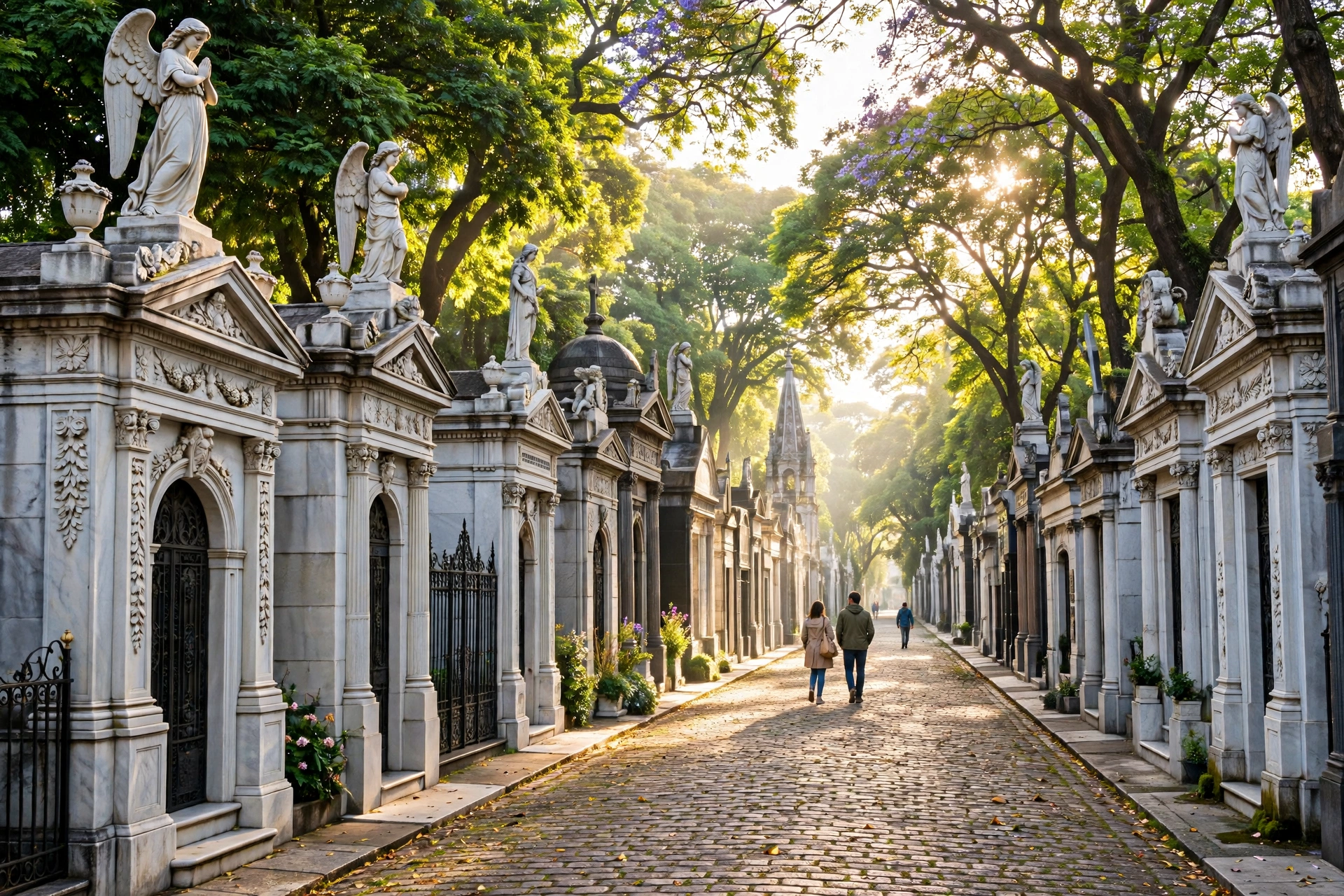
Recoleta Cemetery is a walled city of marble mausoleums and angel statues set along narrow lanes, where Argentina’s presidents and generals lie beside its wealthiest families. One grave draws the biggest crowds. Eva Perón (Evita) rests there, inside the Duarte family vault.
Go early. Morning brings soft light and thin tour groups, and you can grab a map at the entrance before the lanes fill up. Check the official city tourism site for current hours and entry fees before you go.
Tour Teatro Colón
Teatro Colón is Buenos Aires’ grand opera house. It opened in 1908 and is widely praised for its acoustics. Guided tours run in English and lead you through the gilded foyer and main hall before heading into backstage areas.
Reserve tours on the official Teatro Colón website. For the full experience, though, you’ll want a seat at an actual performance, and the program covers opera and ballet as well as concerts.
Visit Plaza De Mayo and Casa Rosada
Plaza de Mayo is Buenos Aires’ political heart. The pink Casa Rosada presidential palace sits on one side, while the Cabildo and the Metropolitan Cathedral also frame the square. Jorge Bergoglio served as archbishop at the cathedral before becoming Pope Francis.
Casa Rosada runs free guided tours on weekends, but you’ll need to reserve online in advance. Afterward, head west. Avenida de Mayo leads straight to Café Tortoni, a historic café founded in 1858 and an easy place to rest your feet.
Shop the San Telmo Market on Sunday
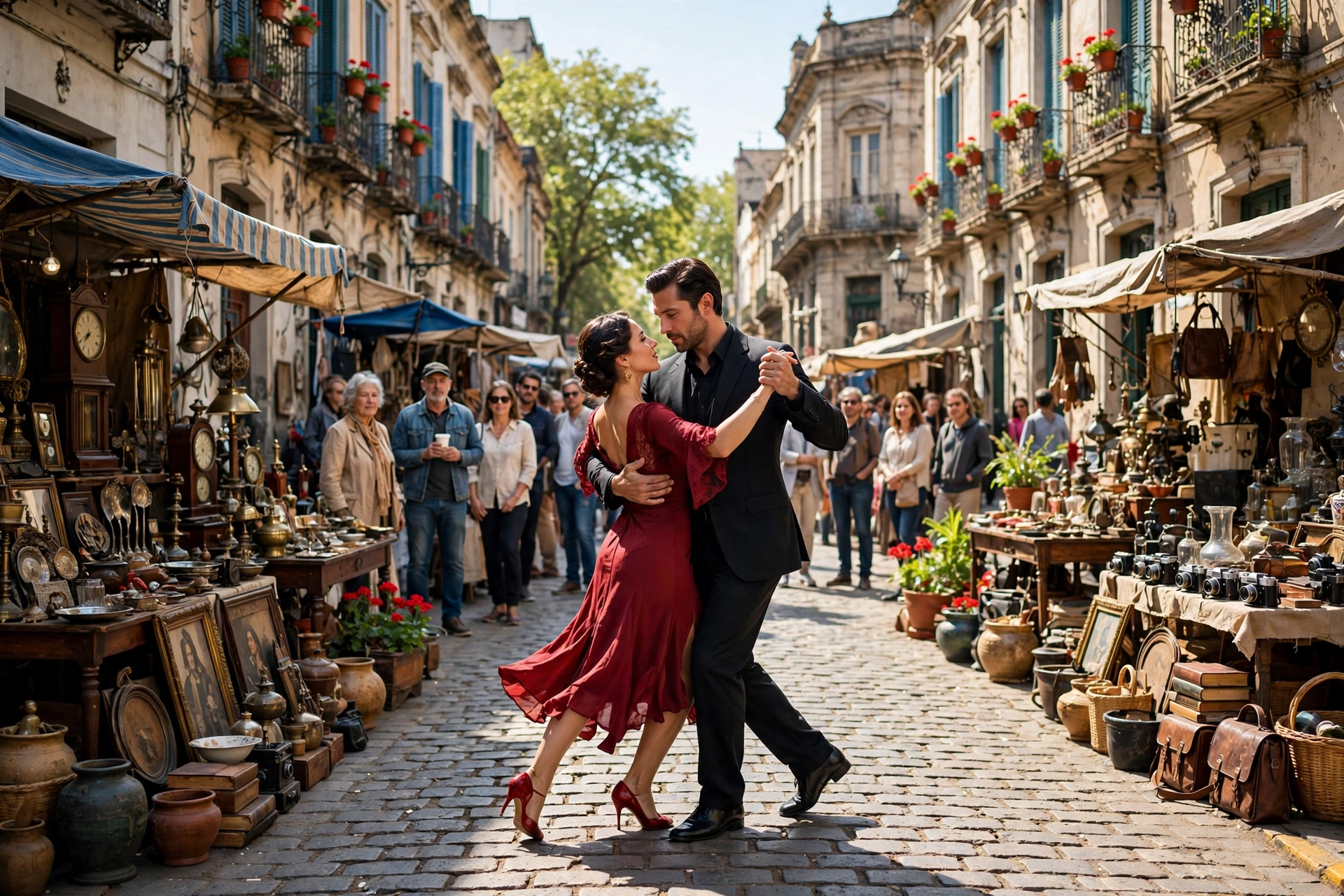
The Feria de San Telmo is a Sunday street market that stretches along Calle Defensa from Plaza Dorrego. It gets lively. Stalls sell antiques, silver mate gourds, leather goods and vintage soda siphons, while street musicians and tango dancers perform for passersby between them.
Get there by late morning and work your way south toward Plaza Dorrego, browsing as you go. Then eat. Lunch inside the Mercado de San Telmo, a 19th-century iron market hall that opens daily, makes an easy break from the stalls.
Photograph Caminito in La Boca
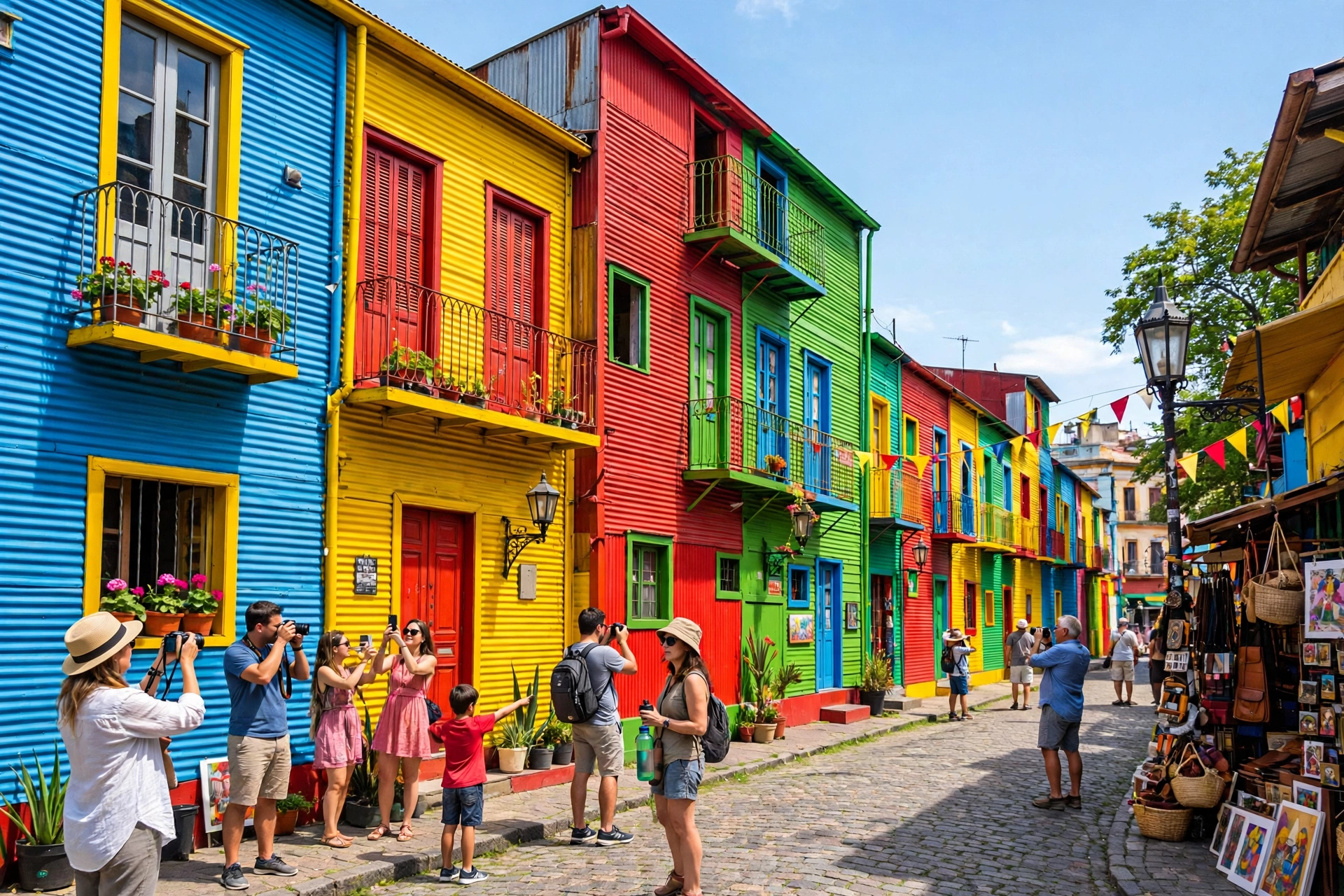
Caminito is a short pedestrian street in the La Boca neighborhood lined with brightly painted conventillos, the tin-and-wood tenement houses of Italian immigrant workers. Football fans get a bonus. La Bombonera, home stadium of the Boca Juniors football club, sits a few blocks away.
Come by daylight. Plan on 1 to 2 hours there, and book a taxi app ride for both your arrival and your departure from the neighborhood. Stick to the main tourist blocks.
Climb Palacio Barolo
Palacio Barolo, an office tower on Avenida de Mayo completed in 1923, takes its design cues from Dante’s Divine Comedy, the epic poem. Tours follow the poem. Guides lead you from “hell” in the lobby up to a lighthouse at the top, where views open over the city.
Groups are small, so reserve ahead. If you have a choice of times, pick a sunset slot, because that’s when the light falls best over the Congress building.
Browse El Ateneo Grand Splendid
El Ateneo Grand Splendid is a bookstore set inside a former theater that opened in 1919. The bones stayed. Original balconies still ring the hall under frescoed ceilings, and a café sits on the old stage, drawing book lovers and photographers every day.
Weekday afternoons are quieter. Most of the stock is in Spanish, though a small English section exists for visitors who don’t read the language.
See Latin American Art at MALBA
The Museo de Arte Latinoamericano de Buenos Aires (MALBA) is a modern museum in Palermo dedicated to Latin American art from the 20th century onward. The permanent collection is the draw. Major Argentine artists hang there beside leading figures from Mexico and Brazil.
MALBA pairs well with two nearby green spaces, the Japanese Garden and the Bosques de Palermo parks, so you can fill a whole afternoon in one area. Plan around closures. The museum website lists its weekly closing days.
Walk the Puerto Madero Waterfront
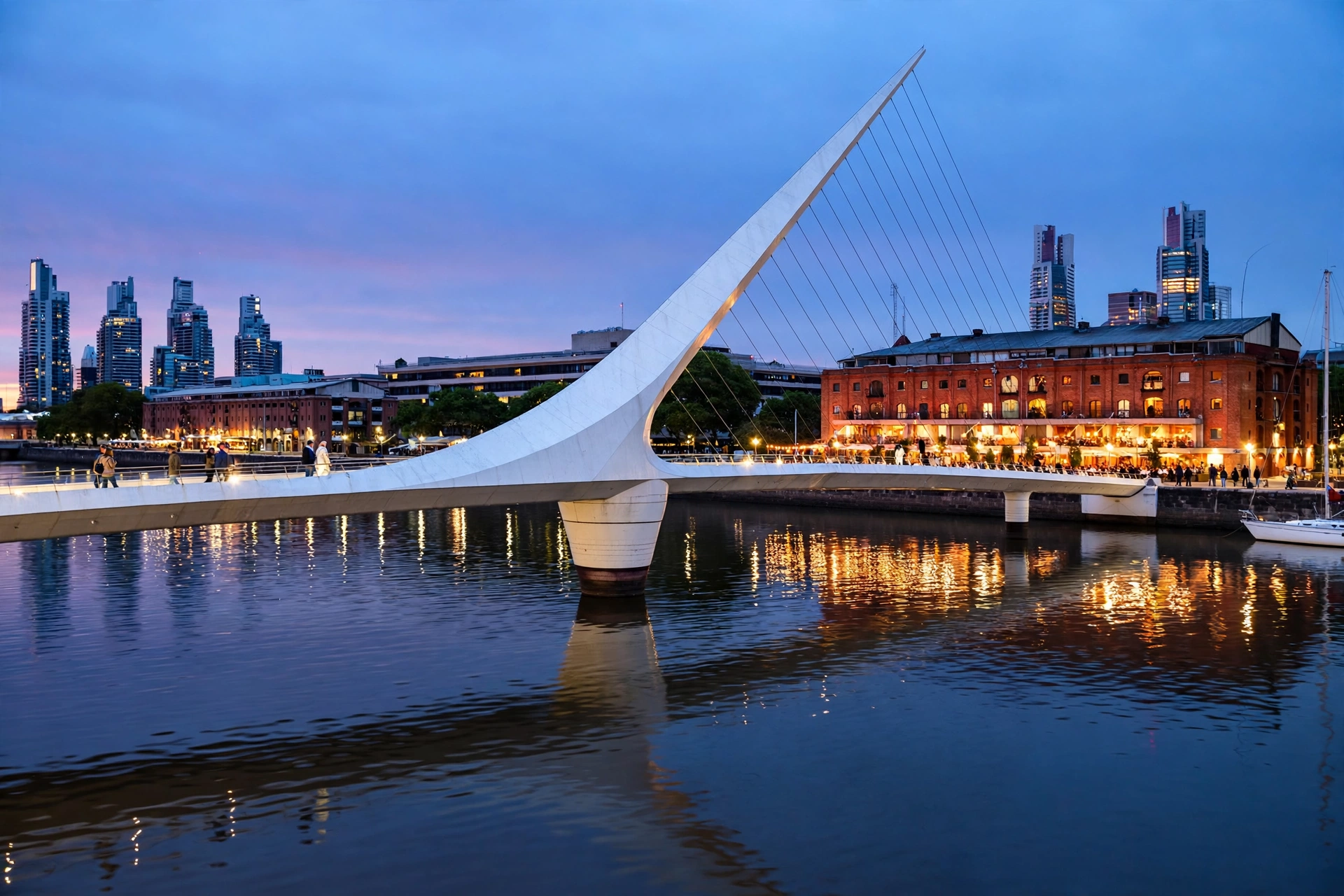
Puerto Madero is a renovated dockland district along the old port, where brick warehouses and steakhouses sit below high-rise apartments. Its icon is a bridge. The white Puente de la Mujer footbridge, designed by Santiago Calatrava, is the area’s signature photo stop.
Time your visit for sunset. Stroll the docks as the light fades, then cross over to the Reserva Ecológica Costanera Sur, a free nature reserve on the river.
Best Neighborhoods to Explore
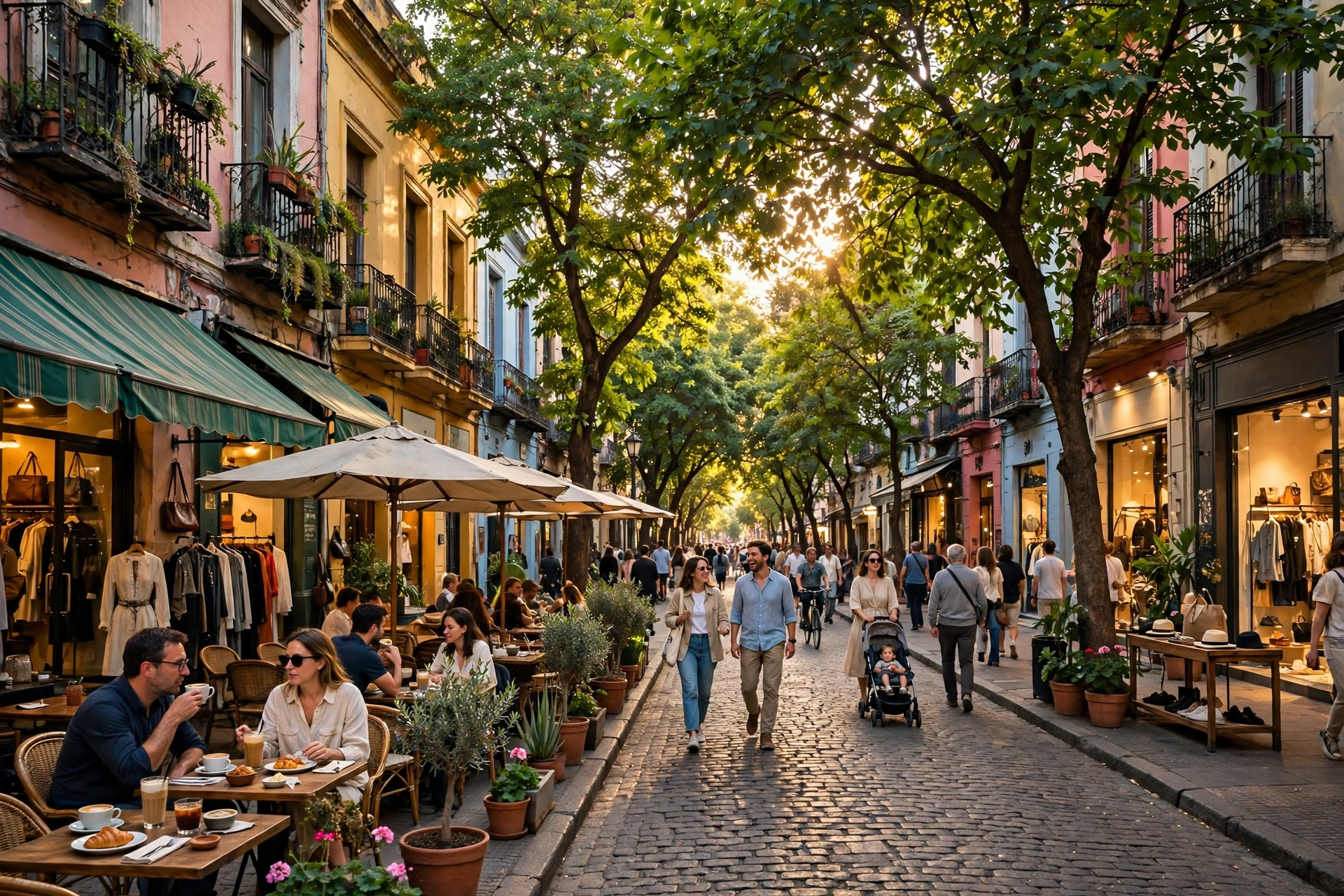
The best neighborhoods to explore in Buenos Aires are Palermo for parks and nightlife, Recoleta for grand architecture, San Telmo for colonial streets and antiques, La Boca for color and football, and Puerto Madero for waterfront dining. Two areas work best as a base. Most visitors stay in Palermo or Recoleta and reach the other barrios by day.
This table compares the main tourist neighborhoods by character and best use, with a safety note for each.
| Neighborhood | Known For | Best For | Safety Note |
|---|---|---|---|
| Palermo | Parks, bars, street art | Staying, dining, nightlife | Generally safe, watch phones |
| Recoleta | Cemetery, mansions, museums | Staying, culture | Generally safe |
| San Telmo | Cobblestones, Sunday market | Antiques, tango | Busy by day, quieter at night |
| La Boca | Caminito, La Bombonera | Photos, football | Daytime only, main streets |
| Puerto Madero | Docks, steakhouses | Sunset walks, dinner | Generally safe, well patrolled |
The barrio splits in two. Palermo Soho holds the densest cluster of boutiques and cafés, plus a wealth of murals. Across the train tracks, Palermo Hollywood trades shopping for food, with its streets given over mostly to restaurants and cocktail bars.
The major points of interest Buenos Aires visitors seek sit within a short taxi ride of Palermo or Recoleta, which makes either one an easy base. Street art fans should look further. Colegiales, just north of Palermo, is known for its street art tours.
Where to See Tango in Buenos Aires
The best places to see tango in Buenos Aires are dinner-show venues such as Café de los Angelitos and El Querandí for polished stage performances, and milongas such as Salón Canning and La Viruta for social dancing among locals. Not every option costs money. Free street tango also appears on Sundays in San Telmo.
This table compares a tango dinner show and a milonga for first-time visitors.
| Experience | Format | Best For | Start Time |
|---|---|---|---|
| Tango dinner show | Staged performance with meal | First-timers, couples | Evening, often after dinner seating |
| Milonga | Social dance hall | Dancers, curious observers | Late night, often past 11 p.m. |
| Street tango | Outdoor performance for tips | Budget travelers | Daytime, San Telmo on Sundays |
Tango Dinner Shows
A tango dinner show is a staged performance where professional dancers and singers work with a live orchestra, usually paired with a set menu and wine. Expect athletic moves. The choreography leans theatrical, with steps few social dancers ever attempt.
Reserve ahead. Book directly with the venue or ask your hotel to arrange it. Many packages bundle dinner with hotel pickup, so you won’t have to find your own way across the city late at night.
Milongas Where Locals Dance
A milonga is a social dance hall where porteños of all ages dance tango in rotating sets known as tandas, often until well after midnight. You don’t have to dance. Grab a table with a drink and simply watch.
Beginners get help. Many milongas run a beginner class before the dancing starts. For something free, La Glorieta, an outdoor gazebo in Barrancas de Belgrano, hosts a weekend milonga under the open sky whenever the weather cooperates.
What to Eat and Drink in Buenos Aires
Buenos Aires is famous for grass-fed beef grilled at a parrilla, Malbec wine, empanadas, dulce de leche, Italian-style pizza, gelato-style helado and mate, a shared herbal drink. Dinner starts late, usually between 9 and 11 p.m. Many kitchens don’t open before 8 p.m.
Steakhouses and Parrillas
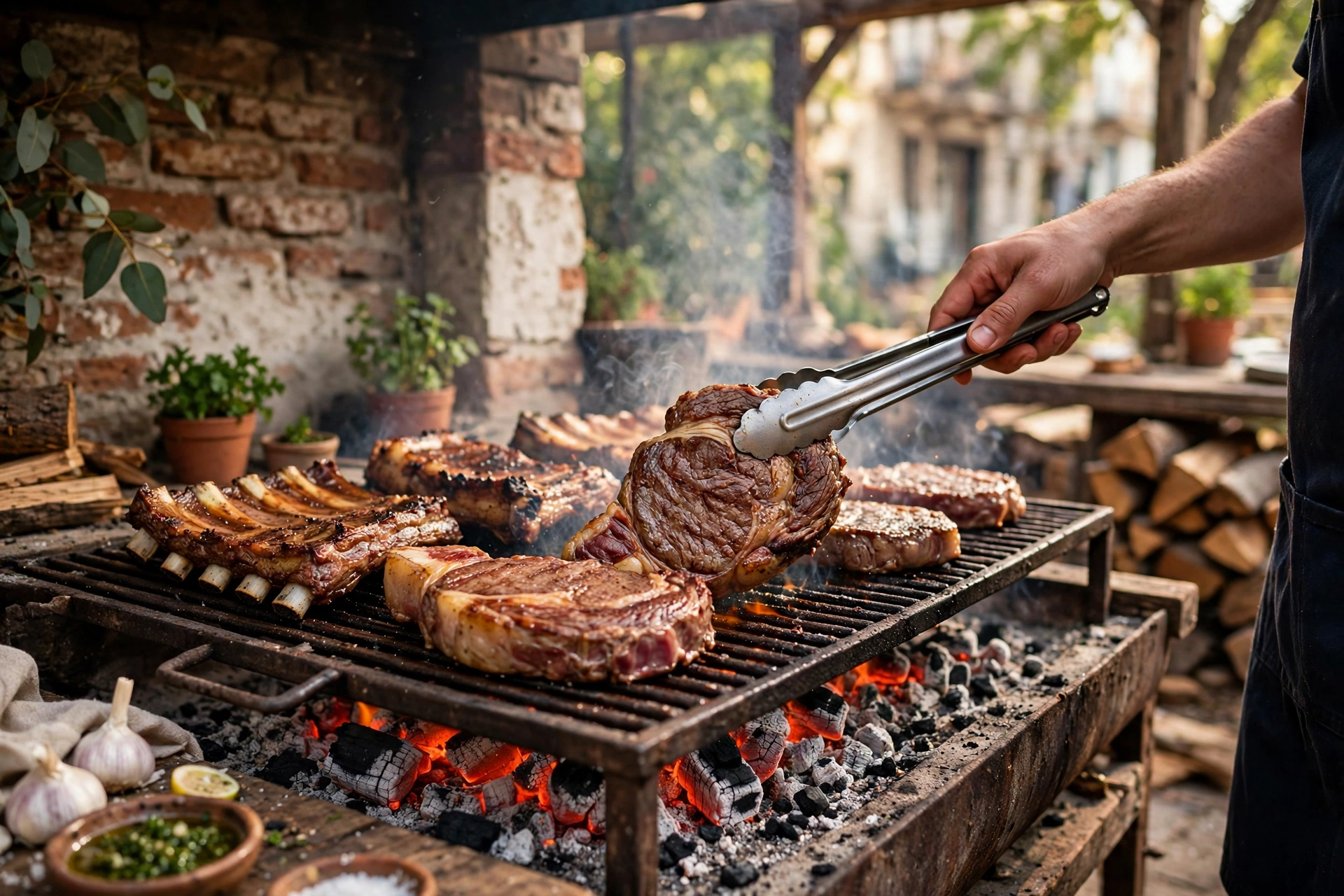
A parrilla is an Argentine grill restaurant that cooks beef and offal over wood or charcoal embers. Classic orders start with bife de chorizo (sirloin strip) and ojo de bife (rib eye), though vacío (flank) deserves a spot on the table too. Want it medium-rare? Ask for jugoso.
Don Julio and La Cabrera, both in Palermo, rank among the city’s most famous parrillas, and you’ll need a reservation at either one. Prefer something low-key? Neighborhood parrillas serve the same cuts in a more casual setting.
Empanadas, Dulce De Leche and Mate
Empanadas are baked or fried turnovers filled with beef, chicken, ham and cheese, or corn, and they make a fast lunch between sights. Order a dozen to share.
Dulce de leche, a thick caramel spread, fills alfajores (sandwich cookies) and pastries, and it swirls through ice cream too. Then there’s mate. This bitter herbal tea is sipped through a metal straw from a shared gourd.
Malbec and Wine Bars
Malbec is Argentina’s signature red grape. It’s grown mainly in the Mendoza region, but you don’t need to travel there, because Buenos Aires wine bars pour it alongside Torrontés, a floral white wine.
Context helps. A guided food tour or wine tasting explains the regions and pairings behind what you’re drinking. Schedule tastings for early evening, so you’ve wrapped up well before the city’s late dinner rush gets going in earnest.
Things to Do in Buenos Aires at Night
The best things to do in Buenos Aires at night are watching a tango show, dancing at a milonga, drinking at a Palermo cocktail bar or rooftop, eating a late steak dinner and attending a football match. Pace yourself. Porteño nights start late, so bars fill after midnight and clubs peak in the early morning hours.
Palermo Soho and Palermo Hollywood hold the city’s densest nightlife. Look beyond Palermo, though. Florería Atlántico, a speakeasy tucked behind a flower shop in Retiro, ranks among the best-known cocktail bars in all of Buenos Aires.
Sports fans shouldn’t skip this. A football match ranks among the best activities in Buenos Aires, and Boca Juniors and River Plate home games draw especially intense crowds.
Tickets are tricky. Boca Juniors sells match tickets mainly to club members. Most international visitors get in through licensed tour packages, which bundle the tickets with transportation to and from the stadium on match day.
Free Things to Do in Buenos Aires
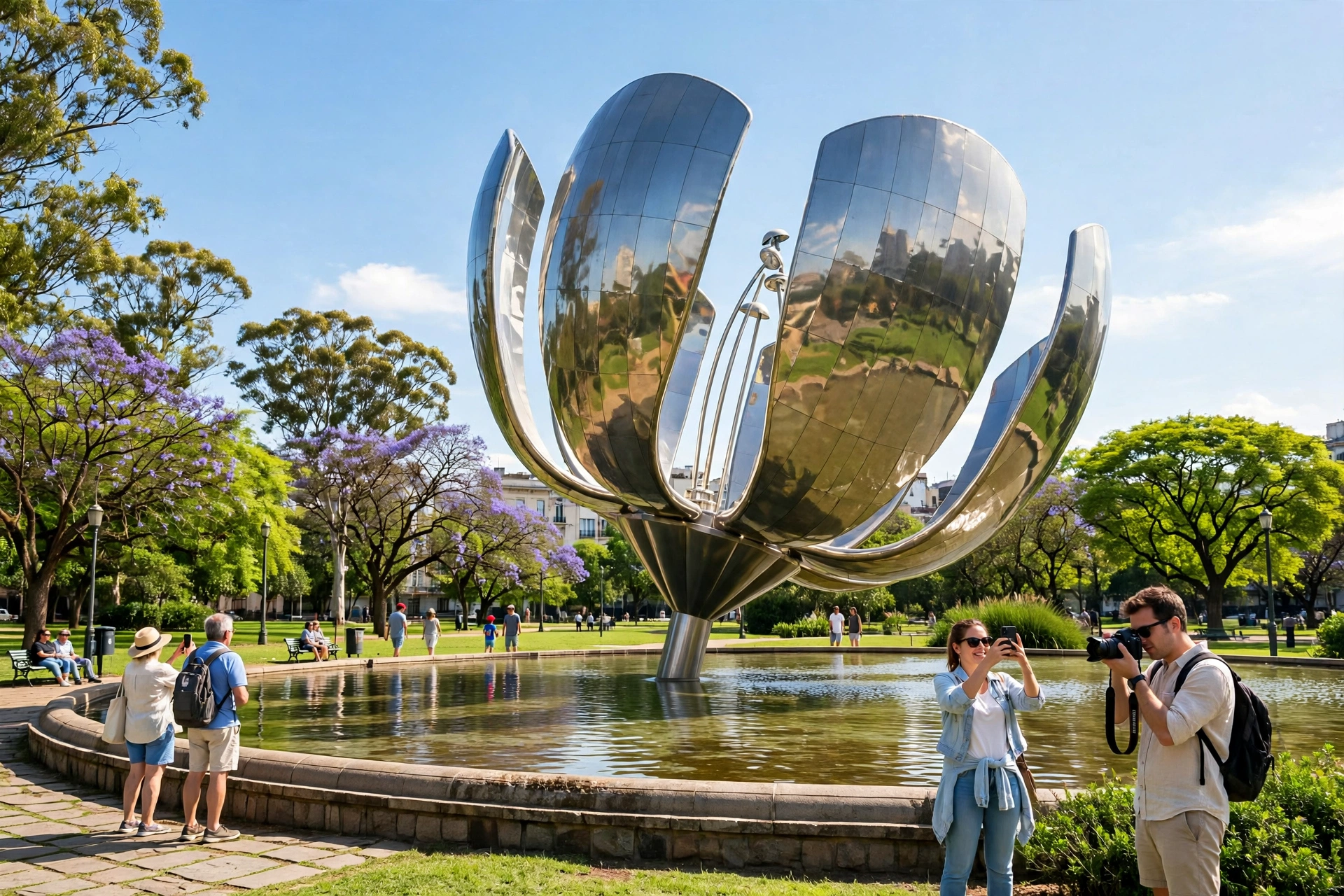
The best free things to do in Buenos Aires include browsing the Sunday San Telmo market, touring Casa Rosada on weekends, walking the Reserva Ecológica Costanera Sur, seeing the Floralis Genérica sculpture and dancing at La Glorieta’s outdoor milonga. Guided options exist too. Tip-based free walking tours cover the city center in English.
- Join a tip-based free walking tour of the center or Recoleta.
- Walk the trails of the Reserva Ecológica Costanera Sur, beside Puerto Madero.
- Photograph the Floralis Genérica, a giant steel flower sculpture in Recoleta.
- Watch street tango on Calle Defensa on Sunday.
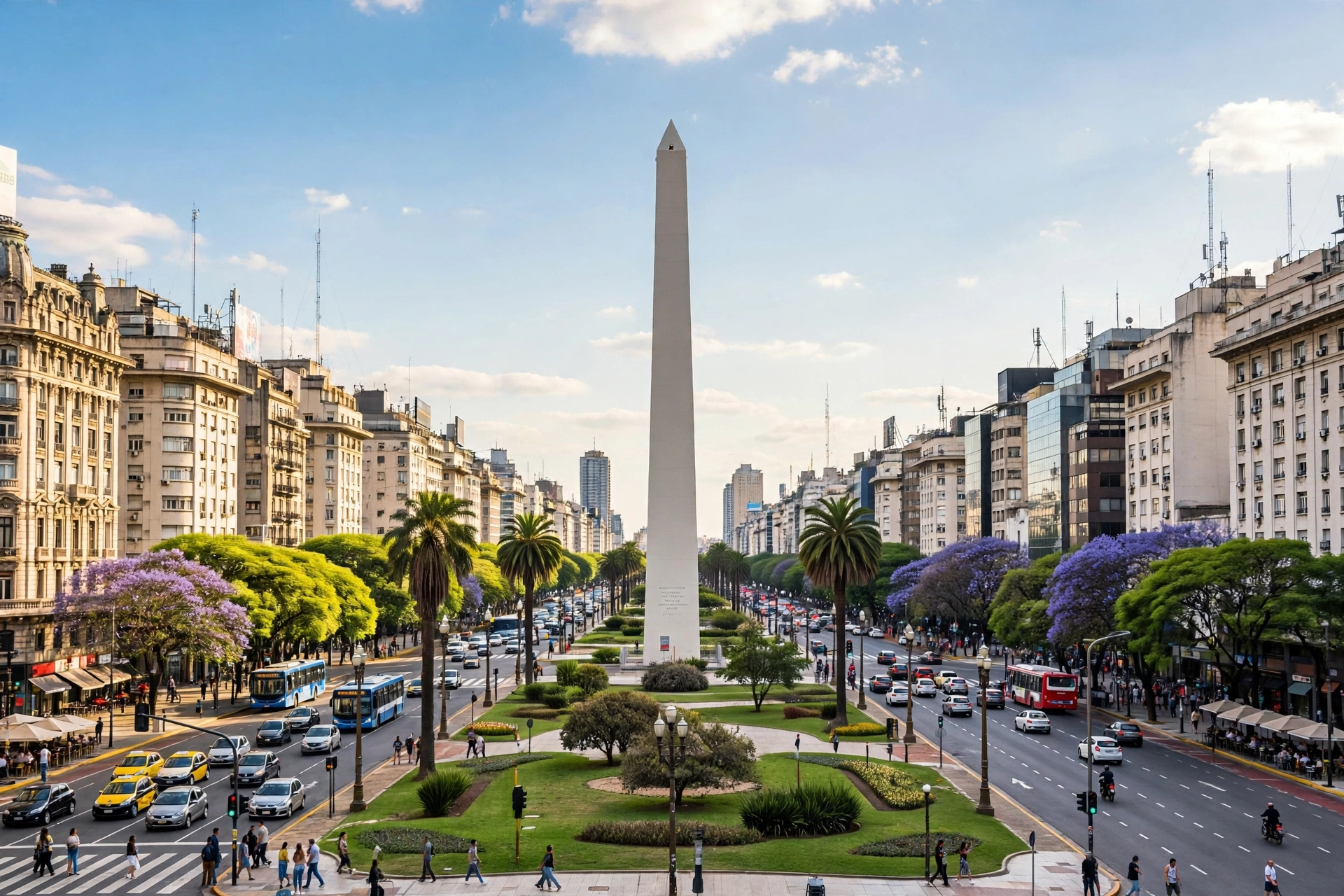
- Stand under the Obelisco on Avenida 9 de Julio, one of the widest avenues in the world.
- Browse El Ateneo Grand Splendid without buying a book.
Best Day Trips from Buenos Aires
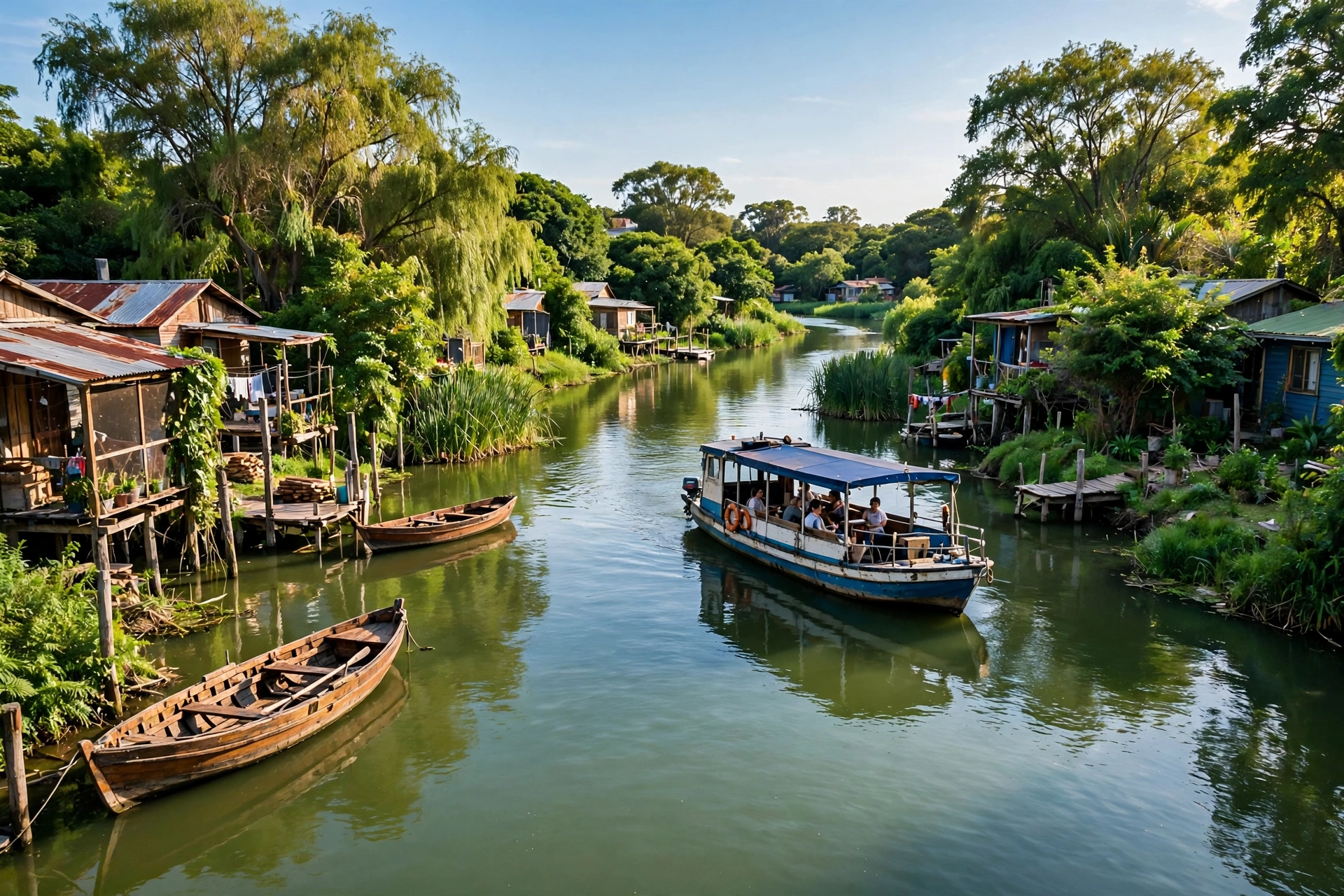
The best day trips from Buenos Aires are the Tigre Delta, a river-island town reached by train in about an hour, and Colonia del Sacramento, a UNESCO-listed colonial town in Uruguay reached by ferry. There’s a third choice. San Antonio de Areco adds gaucho ranch culture for travelers with a rental car or tour.
Travelers searching for things to do in Argentina Buenos Aires beyond the city limits usually end up choosing between these options. Each suits a different mood.
This table compares the top day trips by travel method and passport rules, plus the visitors each suits best.
| Day Trip | Travel Method | Passport Needed | Best For |
|---|---|---|---|
| Tigre Delta | Train from Retiro | No | River boats, markets |
| Colonia del Sacramento | Ferry across Río de la Plata | Yes | Colonial streets, Uruguay stamp |
| San Antonio de Areco | Bus, car or tour | No | Gaucho traditions |
| Feria de Mataderos | Taxi or bus within city | No | Folk music, regional food |
Tigre Delta
Tigre is a riverside town at the edge of the Paraná Delta, a maze of islands and channels north of the city. Getting there is easy. Take the Mitre line train from Retiro station, then ride a commuter boat or tour launch through the waterways.
Back on land, the Puerto de Frutos market is the place to browse for wicker furniture and crafts before your return train. Weekends draw the biggest crowds.
Colonia Del Sacramento, Uruguay
Colonia del Sacramento is a small Uruguayan town whose historic quarter is a UNESCO World Heritage Site. Wander slowly. Cobblestone streets wind between Portuguese colonial houses in the old town, and a lighthouse stands watch over the whole historic quarter.
Bring a valid passport. Buquebus and Colonia Express both run fast ferries from Buenos Aires. You’re crossing an international border, and nobody boards without clearing passport control at the Buenos Aires port terminal before departure.
Feria De Mataderos for Gaucho Culture
The Feria de Mataderos is a folk fair on the western edge of Buenos Aires, where gaucho horsemanship shares the stage with folk dancing. Come hungry. Regional food such as locro stew fills the stalls.
Timing matters here. The fair’s schedule shifts by season and sometimes pauses in summer, so confirm the current dates on the city tourism site before going.
How Many Days Do You Need in Buenos Aires?
Most US travelers need 3 to 5 days in Buenos Aires: 3 full days cover the core attractions, tango and a steak dinner, while 4 to 5 days add a day trip to Tigre or Colonia and slower time in Palermo. Don’t count arrival day. Flights from the US typically run overnight, so the day you land rarely works as a full sightseeing day.
This table compares trip lengths by what each covers.
| Trip Length | What It Covers | Best For |
|---|---|---|
| 1 day | Recoleta, Plaza de Mayo, tango show | Cruise or layover visitors |
| 3 days | Core sights, San Telmo, La Boca, Palermo | First-time visitors |
| 5 days | Core sights plus 1 to 2 day trips | Relaxed pace, food lovers |
| 7 days | City plus Colonia and Tigre | Repeat or slow travelers |
3-Day Buenos Aires Itinerary
This 3 day itinerary Buenos Aires first-timers can follow starts on a Saturday, so Day 2 lands on Sunday for the San Telmo market, and groups sights by neighborhood to cut transit time. Day 1 stays in the historic center and Day 2 heads south. Recoleta and Palermo fill Day 3.
Many things to do in Buenos Aires Argentina depend on the day of the week, so a Saturday start isn’t a random choice. Arriving on another day? Shift the plan to match.
Day 1: Historic Center and Teatro Colón
- Start at Plaza de Mayo and join a reserved weekend tour of Casa Rosada.
- Walk Avenida de Mayo and stop for coffee at Café Tortoni.
- Tour Palacio Barolo in the early afternoon.
- Take a guided tour of Teatro Colón.
- Photograph the Obelisco on Avenida 9 de Julio.
- Finish with a tango dinner show.
Day 2: San Telmo, La Boca and Puerto Madero
- Arrive at the Feria de San Telmo by late morning.
- Eat lunch at the Mercado de San Telmo.
- Take a taxi app to Caminito in La Boca for early afternoon photos.
- Ride back north to Puerto Madero before sunset.
- Cross the Puente de la Mujer at dusk.
- Book a late steak dinner at a parrilla.
Day 3: Recoleta and Palermo
- Visit Recoleta Cemetery when it opens.
- Browse El Ateneo Grand Splendid.
- See the Floralis Genérica sculpture.
- Spend the afternoon at MALBA and the Japanese Garden.
- Walk Palermo Soho for shopping and street art.
- End the night at a milonga or a Palermo cocktail bar.
What Is the Best Time to Visit Buenos Aires?
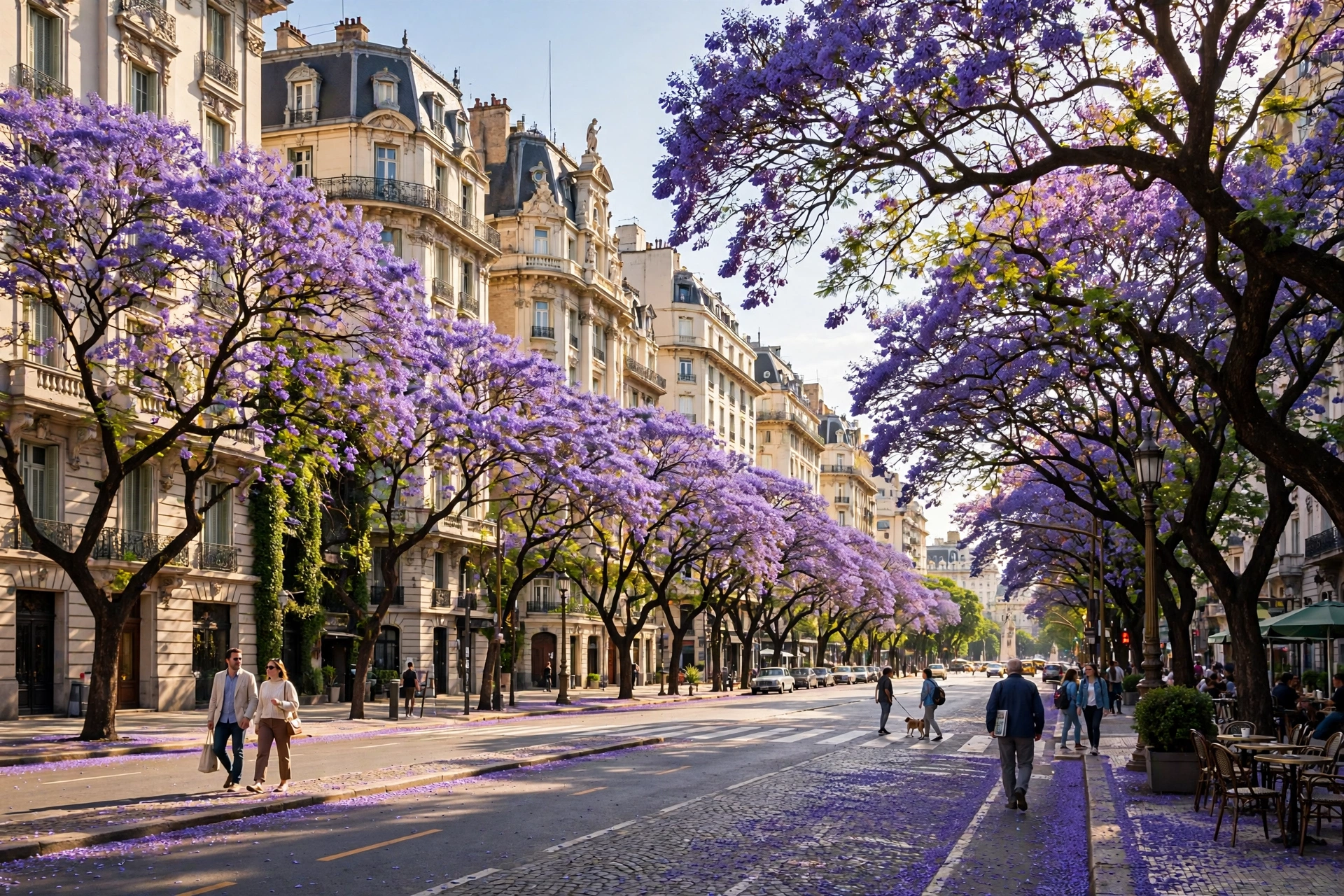
The best time to visit Buenos Aires is spring, September through November, and fall, March through May, when weather is mild and walking all day is comfortable. Jacaranda trees bloom purple across the city in October and November, while summer from December through February brings humid highs near 86°F (30°C).
Seasons in Argentina run opposite to those in the US, so a December trip means summer heat instead of winter cold. Plan around that. This table compares each season for travel.
| Season | Months | Weather | Travel Notes |
|---|---|---|---|
| Spring | September to November | Mild, sunny | Jacaranda blooms, ideal walking |
| Summer | December to February | Hot, humid | Many locals leave in January |
| Fall | March to May | Mild, cooler nights | Pleasant, good for food tours |
| Winter | June to August | Cool, highs near 59°F (15°C) | Peak opera and theater season |
Is Buenos Aires Safe for American Tourists?
Buenos Aires is generally safe for American tourists who take big-city precautions, because the most common risks are pickpocketing, phone snatching and distraction scams. Use extra caution at night in La Boca beyond Caminito, around Constitución and Once, and near Retiro station, and check the US Department of State advisory before travel.
Hold your phone away from the curb. Thieves on motorbikes snatch phones straight from pedestrians’ hands, then ride off before anyone can react. A crossbody bag helps, as long as it stays zipped and sits in front of you.
Learn the “mustard scam” before you arrive. Someone squirts a substance on your clothes, and a friendly helper offers to clean it off while quietly lifting your wallet. Don’t stop. Walk away immediately.
After dark, skip street cabs. Book a ride through Uber or Cabify, or call an official radio taxi instead of flagging one down.
Can You Use US Credit Cards in Buenos Aires?
Yes, US credit cards work at most hotels, restaurants and shops in Buenos Aires, and since late 2022 Argentina has converted foreign Visa and Mastercard purchases at a rate close to the market rate rather than the lower official rate. Cash still helps at markets, small cafés and for tips.
Rules shift fast, though. Argentina changes its currency policies often, so compare current card rates against cash and transfer rates in the week before your trip.
This table compares payment methods for US travelers.
| Payment Method | Best Use | Watch Out For |
|---|---|---|
| US credit card | Hotels, restaurants, shops | Foreign transaction fees on some cards |
| US dollar cash | Exchange for pesos | Damaged bills may be refused |
| ATM withdrawal | Emergency pesos | High fees, low limits |
| Money transfer service | Large peso amounts | Pickup location hours |
Pick a card with no foreign transaction fees. At checkout, some terminals offer to charge you in US dollars instead, and you’ll get a poor conversion rate if you accept. Choose pesos every time.
Buenos Aires Travel Tips for Americans
The essential Buenos Aires travel tips for Americans are to carry a valid passport, use a credit card with no foreign transaction fees, buy a SUBE card for the Subte and buses, book rides through Uber or Cabify, and plan dinner after 9 p.m. Argentina runs 1 to 2 hours ahead of US Eastern Time, depending on the season.
Pack an adapter. Buenos Aires runs on 220-volt electricity with Type C and Type I plugs, which won’t fit standard US chargers. At sit-down restaurants, a tip of about 10% is customary.
Entry Rules for US Passports
US citizens enter Argentina for tourism without a visa and receive stays of up to 90 days. There’s no entry fee. Argentina suspended its reciprocity fee for US citizens in 2016.
Most flights from the US land at Ministro Pistarini International Airport, known as Ezeiza (EZE). Traffic sets the pace from there. Expect the drive downtown to take anywhere from 45 minutes to more than an hour.
Getting Around with the SUBE Card
- Buy a SUBE card at a Subte station, kiosk or tourist office.
- Load pesos at station machines or authorized kiosks.
- Tap the card at Subte gates and on bus readers.
- Check routes with Google Maps or the city’s official transit app.
- Reload before the balance runs low.
Best Neighborhood to Stay
Palermo is the best neighborhood to stay for most first-time visitors, thanks to its restaurants, parks and nightlife. Want calm instead? Recoleta suits travelers who prefer quieter streets and classic architecture.
San Telmo works if you’re after character and tango right outside your door. For polished hotels near the water, Puerto Madero fits.
Conclusion
Buenos Aires rewards travelers who plan by neighborhood and by day of the week. Sunday matters most. Lock it in for San Telmo, book your Teatro Colón and Casa Rosada tours early, and reserve a late steak dinner before you land.
The things to do in Buenos Aires Argentina keep expanding as new restaurants, galleries and milongas open each season. Rules change too. Confirm entry requirements, currency policy and attraction hours shortly before departure, then start sketching a second trip built around Colonia, Tigre or a spring visit timed to the jacaranda bloom.