Things to Do in Chicago: 25 Must-See Spots Locals Love
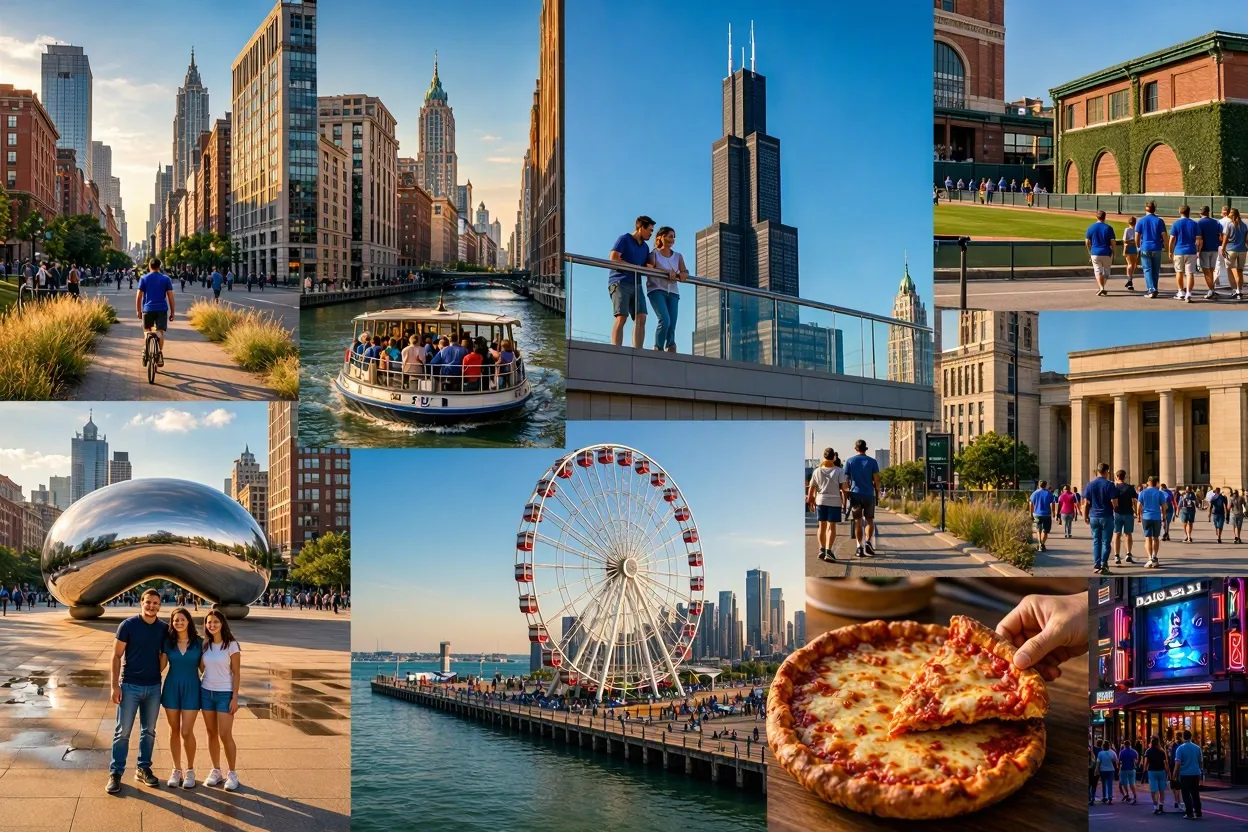
The best things to do in Chicago are an architecture river cruise, Millennium Park, the Art Institute of Chicago and Skydeck’s glass Ledge, followed by deep dish pizza and a day in a neighborhood such as Pilsen or Hyde Park. Give the city 3 to 4 days. That covers the Loop, the lakefront museums and a neighborhood or two without turning the trip into a sprint between ticket lines, and it leaves room for the new Obama Presidential Center, which opened on the South Side in June. Prices in this guide reflect what attractions charge as of October 2026.
What Are the Best Things to Do in Chicago?
The 10 best things to do in Chicago mix 6 paid icons with 4 free landmarks. Wondering what things to do in Chicago first? Start with this table, which pairs each pick with its adult price and a realistic visit length.
| Attraction | Area | Adult Price | Typical Visit |
| Architecture river cruise | Chicago River | About $45 and up | 75 to 90 minutes |
| Millennium Park and Cloud Gate | Loop | Free | 1 hour |
| Art Institute of Chicago | Loop | $32 | 3 hours |
| Skydeck Chicago | Loop | $32 | 1.5 to 2 hours |
| Field Museum | Museum Campus | From about $30 | 3 hours |
| Shedd Aquarium | Museum Campus | About $40 | 2 to 3 hours |
| Obama Presidential Center | Jackson Park | $30 (museum) | 3 hours |
| Lincoln Park Zoo | Lincoln Park | Free | 2 hours |
| Navy Pier | Streeterville | Free entry | 2 hours |
| Chicago Cultural Center | Loop | Free | 45 minutes |
Must-See Things to Do in Chicago Downtown
Eight must-see stops sit inside the 3-mile (4.8 km) stretch between Oak Street and Grant Park, so you can cover most of them on foot. Comfortable shoes beat any taxi app here.
1. Take an Architecture River Cruise
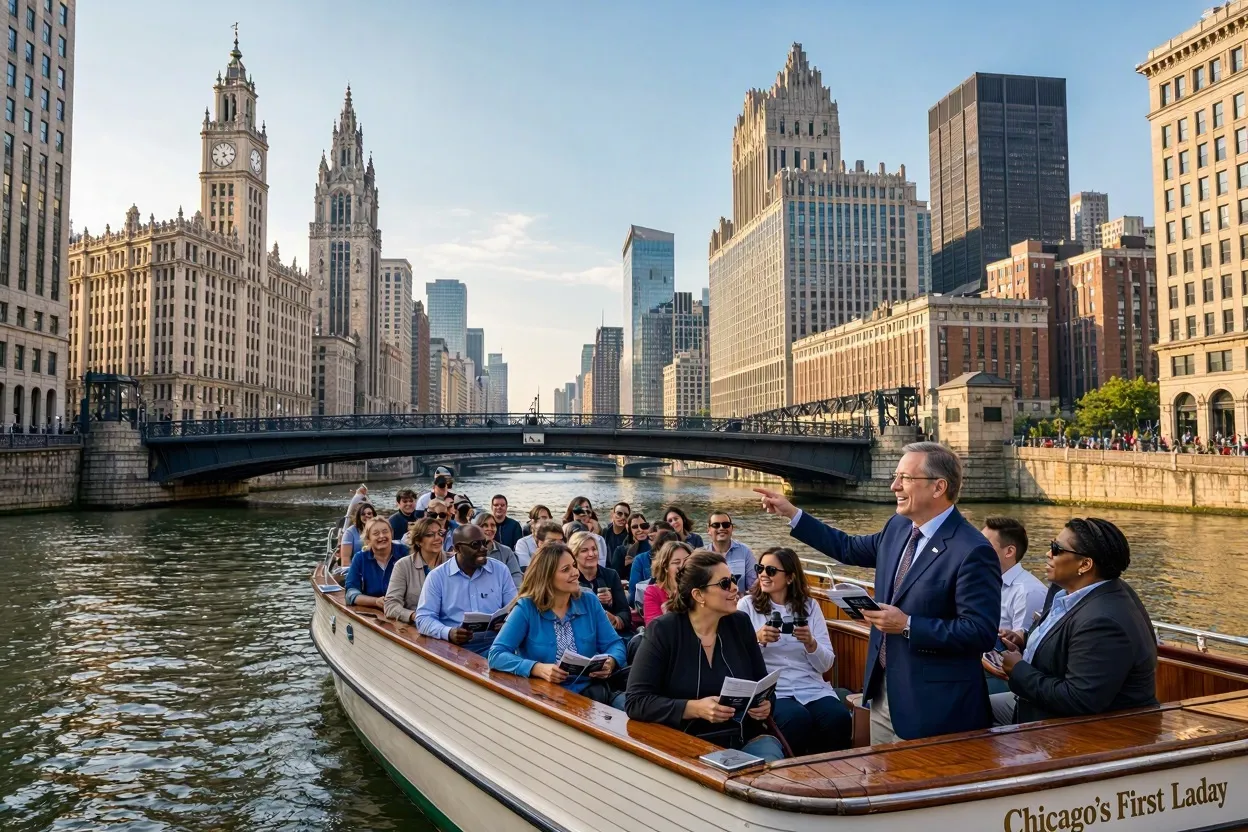
Book a 90-minute architecture cruise on your first day, because it explains the skyline you’ll walk through for the rest of the trip. The Chicago Architecture Center (CAC) runs its docent-led tour aboard Chicago’s First Lady along all 3 branches of the Chicago River. You’ll pass 50+ buildings. Docents cover landmarks such as the Wrigley Building, the Tribune Tower, the art deco Merchandise Mart and Mies van der Rohe’s AMA Plaza, and the boat slips under 13 bascule bridges on the way. Commercial operators, Wendella among them, run 75-minute versions for about $45. Choose the docent tour if architecture is the main reason you came.
2. See Cloud Gate in Millennium Park
Visit Cloud Gate around 7 a.m. to photograph the sculpture without a crowd. Anish Kapoor built “the Bean” from 168 welded stainless steel plates, and its mirrored skin bends the skyline into a curve. Entry is free. Two minutes south, Crown Fountain’s pair of 50-foot (15 m) glass block towers project the faces of about 1,000 Chicagoans, and in summer those faces spit water onto kids wading below. Frank Gehry’s Jay Pritzker Pavilion hosts free concerts from June through August. Cross the BP Pedestrian Bridge in winter, when Maggie Daley Park opens its ice skating ribbon.
3. Step Onto the Ledge at Skydeck Chicago
Skydeck Chicago costs $32 for adults and $24 for kids ages 3 to 11, and the ticket includes The Ledge. Five glass boxes jut 4.3 feet (1.3 m) from the 103rd floor of Willis Tower, 1,353 feet (412 m) above Wacker Drive. Lines get long. Peak waits stretch to 2 to 4 hours, so reserve the first timed slot of the morning online. Want a cocktail with your view? Head to 360 CHICAGO on the 94th floor of 875 North Michigan Avenue, the former John Hancock Center, where TILT tips you over the street for an extra $9 to $10.
4. Spend a Morning at the Art Institute of Chicago
Adult admission is $32, and the museum is closed on Tuesdays. Doors open at 11 a.m. and close at 5 p.m., except Thursdays, when galleries stay open until 8 p.m. Its collection spans 5,000 years. Four works pull the biggest crowds: Grant Wood’s American Gothic, Georges Seurat’s A Sunday on La Grande Jatte, Edward Hopper’s Nighthawks and Claude Monet’s haystack series. Kids under 14 get in free. A $40 Fast Pass skips the general line, a worthwhile upgrade on summer weekends.
5. Walk the Chicago Riverwalk
The Chicago Riverwalk runs 1.25 miles (2 km) along the river’s main branch and stays open from 6 a.m. to 11 p.m. Wine bars and kayak rentals share the path with tour boat docks between Lake Street and the lakefront. On select evenings, Art on theMART projects a free digital art show across the 2.5-acre (1 ha) facade of the Merchandise Mart. Grab a riverside table before sunset. That’s when the towers turn gold.
6. Find the Start of Route 66
Historic Route 66 begins on Adams Street at Michigan Avenue, across from the Art Institute. The highway turns 100 in 2026, and Choose Chicago is marking the centennial with events throughout the year. Snap a photo at the “Begin” sign. For breakfast, walk west to Lou Mitchell’s on Jackson Boulevard, a diner that’s fed road-trippers since 1923. Planning to drive the route? Our travel cost calculator estimates the gas.
7. Look Up at the Chicago Cultural Center Dome
Admission to the Chicago Cultural Center is free, and the building holds the world’s largest Tiffany stained glass dome. Built in 1897 as the city’s first central library, the interior glitters with mosaics of marble and colored glass. Free art exhibits rotate through the upper floors. Budget 45 minutes, then cross Michigan Avenue to Millennium Park.
8. Shop Michigan Avenue and State Street
The Magnificent Mile runs along Michigan Avenue from the Chicago River north to Oak Street, lined with flagship stores from Nordstrom to Tiffany & Co. Near its midpoint stands the Water Tower, built in 1869 and one of the few structures that survived the Great Chicago Fire of 1871. State Street offers a different kind of history. At Macy’s, the former Marshall Field’s flagship, a Tiffany mosaic dome made from 1.6 million pieces of glass caps the atrium, and the Walnut Room still serves lunch under a towering Christmas tree each holiday season. Pick up a bag of Garrett Mix, the cheese and caramel popcorn locals call Chicago Mix, on the way out.
Lakefront Museums and Attractions
Chicago’s Museum Campus puts 3 major institutions on 57 acres (23 ha) of lakefront parkland, and the CityPASS covers 2 of them. Plan a full day here.
9. Meet SUE at the Field Museum
SUE, among the most complete Tyrannosaurus rex skeletons ever found, is the Field Museum’s star. Basic adult tickets start near $30. Beyond dinosaurs, the museum holds an Egyptian tomb you can walk through and gem halls that kids tend to rush past. Give it 3 hours.
10. Watch the Belugas at Shedd Aquarium
Shedd Aquarium charges about $40 for adults and holds 5 million gallons (18.9 million liters) of water. Built in 1930, it once ranked as the world’s largest indoor aquarium. Beluga whales and the circular Caribbean Reef exhibit draw the longest stares. Arrive at opening, since school groups pack the galleries by 11 a.m.
11. Catch the Skyline From Adler Planetarium
The Adler Planetarium opened in 1930 as the first planetarium in the Western Hemisphere, and adult admission starts at $25. Sky shows run all day. Even without a ticket, walk the path behind the building. It’s the best free skyline photo spot in the city.
12. Spend an Afternoon at Navy Pier
Navy Pier is free to enter, though rides and attractions charge separately. Built in 1916, the pier stretches 3,300 feet (1 km) into Lake Michigan. The Centennial Wheel and the Chicago Children’s Museum suit families, while Chicago Shakespeare Theater pulls an older crowd. Lake cruises leave from the south dock.
13. Bike the Lakefront Trail
The Lakefront Trail runs 18 miles (29 km) along Lake Michigan, and Divvy bike share stations sit near almost every access point. Ride north from the Museum Campus to North Avenue Beach, roughly 4 miles (6.4 km), where an ocean liner shaped beach house serves snacks with a skyline view. Oak Street Beach sits halfway there. Weekday mornings stay quietest.
14. Explore the Museum of Science and Industry
Adult tickets to the Griffin Museum of Science and Industry (MSI) cost $25.95. The museum fills the 1893 World’s Columbian Exposition’s Palace of Fine Arts in Hyde Park. A captured German U-505 submarine sits indoors, and a replica coal mine takes visitors underground by elevator. Its Christmas Around the World trees appear each holiday season. Pair it with the Obama Presidential Center, which sits less than 1 mile (1.6 km) south.
Things to Do in Chicago Beyond the Loop
Chicago has 77 community areas, and 7 stops outside the Loop justify a half-day trip each. Skipping them means missing the city that residents actually live in.
15. Tour the Obama Presidential Center
The Obama Presidential Center opened on June 19, 2026, in Jackson Park at 6001 S. Stony Island Avenue. Museum tickets cost $30 for adults and $23 for kids ages 3 to 11, with discounts for Illinois residents, and every entry is timed. Book online. Inside, 4 floors cover the Obama presidency, including a full-scale Oval Office replica and an exhibit of Michelle Obama’s fashion. The rest of the 19.3-acre (7.8 ha) campus is free, including the gardens, a playground, walking trails and a Chicago Public Library branch. From downtown, the Chicago Transit Authority (CTA) No. 6 Jackson Park Express bus runs south along Stony Island Avenue.
16. Walk the Murals of Pilsen
Pilsen holds one of Chicago’s densest concentrations of street murals, most of them along 18th Street and the 16th Street rail embankment. Start at the National Museum of Mexican Art, which charges no admission. The Pink Line’s 18th Street station is covered in murals itself. Stay for carnitas at a neighborhood taqueria before heading back.
17. Ride or Stroll The 606
The 606 is a 2.7-mile (4.3 km) raised trail built on an old rail line, connecting Wicker Park, Bucktown, Humboldt Park and Logan Square. Hop off the Blue Line at Damen. Logan Square’s restaurants and cocktail bars wait at the trail’s western half, so time a walk to end at dinner.
18. Visit Lincoln Park Zoo for Free
Yes, Lincoln Park Zoo is free, and it has been since 1868. Polar bears and the gorilla troop headline. In winter, ZooLights runs from November 20, 2026, to January 3, 2027, and that event does require a ticket. The Chicago History Museum sits 10 minutes south on foot.
19. Warm Up at Garfield Park Conservatory
Garfield Park Conservatory is free and ranks among the largest greenhouse conservatories in the United States. Dale Chihuly’s glass lily pads float in one of its ponds. On a 20°F (-7°C) January day, the fern room feels tropical. Take the Green Line to Conservatory-Central Park Drive.
20. Catch a Game or Tour at Wrigley Field
Wrigley Field opened in 1914 and is a National Historic Landmark. Ivy still covers the outfield walls. Take the Red Line to Addison, one block from the gates. From November 20 to December 31, 2026, Christkindlmarket Wrigleyville fills Gallagher Way next door.
21. See Frank Lloyd Wright’s Oak Park
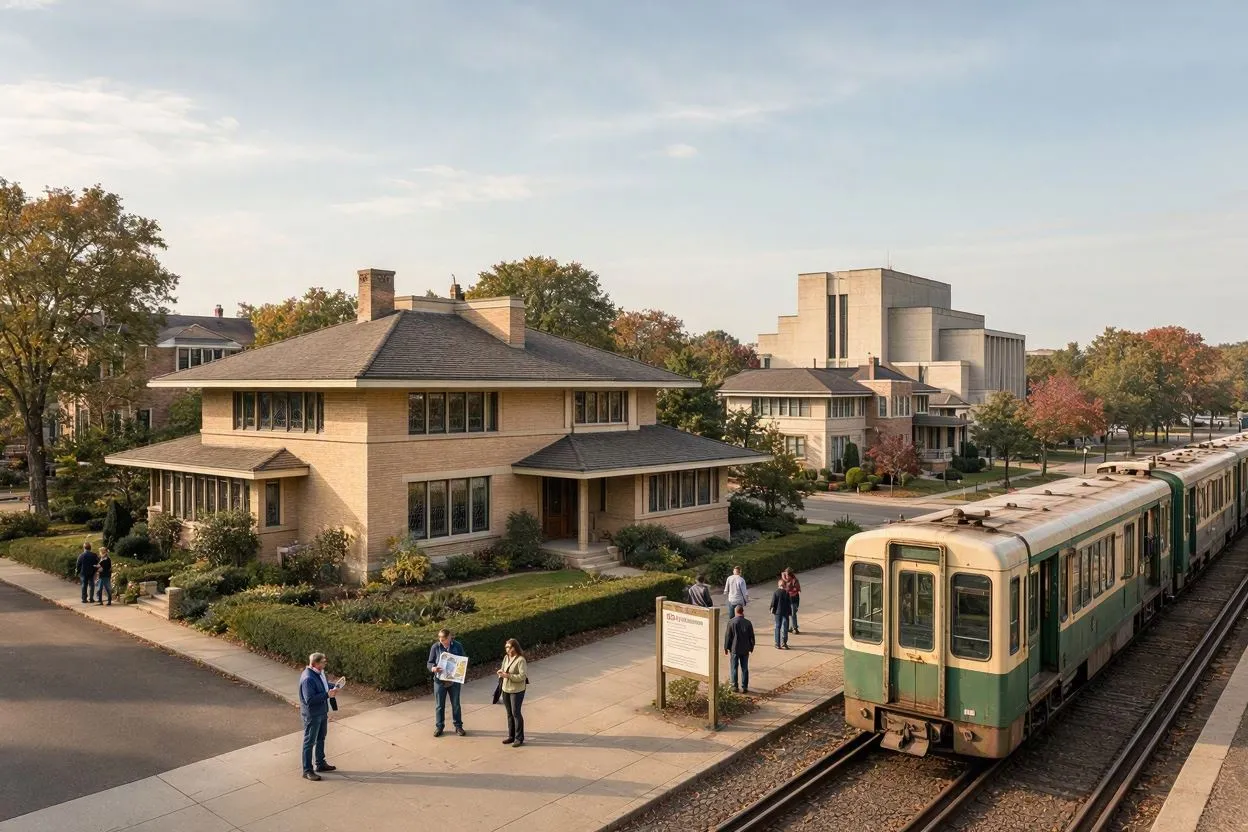
Oak Park holds the world’s largest collection of Frank Lloyd Wright buildings, including his Home and Studio and Unity Temple. Take the Green Line west to the Oak Park stop. Guided tours from the Frank Lloyd Wright Trust explain how he developed the Prairie School style, and a self-guided map covers the neighborhood’s private homes. Plan half a day.
What Food Should You Try in Chicago?
Try 4 Chicago originals: deep dish pizza, tavern-style thin crust, the Italian beef and the Chicago-style hot dog. Each one has loyalists who’ll argue about where to get it.
22. Compare Deep Dish and Tavern-Style Pizza
Order deep dish once and tavern-style at least twice, because the second is what most locals eat. Deep dish pies take 40 to 45 minutes to bake, so call ahead. Lou Malnati’s buttery crust and Pequod’s caramelized cheese edge mark the 2 main schools, while Giordano’s specializes in stuffed pizza. Tavern-style is a cracker-thin pie cut into squares, and Vito & Nick’s on the South Side has served it since the 1920s.
23. Order an Italian Beef and a Chicago Dog
Ask for your Italian beef “dipped” with hot giardiniera. Thin-sliced roast beef soaked in jus fills a French roll, and Al’s #1 Italian Beef on Taylor Street has served it since 1938. A proper Chicago dog skips ketchup entirely. Instead, an all-beef frank on a poppy seed bun gets 7 toppings: yellow mustard, neon green relish, chopped onion, tomato slices, a pickle spear, sport peppers and celery salt. Superdawg and Portillo’s both make a reliable version. Hungry for one more? Humboldt Park’s jibarito swaps bread for fried plantains.
Fun Things to Do in Chicago at Night
Catch live blues in the South Loop or improv comedy in Old Town, then end with a lit-up skyline from the Riverwalk.
24. Hear Live Blues and Jazz
Buddy Guy’s Legends in the South Loop books live blues 7 nights a week. Chicago electrified the blues after the Great Migration, and the sound still fills clubs across the North Side and the South Loop alike. Kingston Mines in Lincoln Park runs 2 stages until late. For jazz, the Green Mill in Uptown dates to 1907 and keeps its Prohibition-era booths. For country and bluegrass, see the best things to do in Nashville.
25. Laugh at The Second City
The Second City has staged improv and sketch comedy in Old Town since 1959. Alumni include Bill Murray, Tina Fey, Stephen Colbert and Steve Carell. No two shows match, because the cast improvises from audience suggestions. Take the Brown Line to Sedgwick.
Free Things to Do in Chicago
Chicago offers at least 9 major free attractions, enough to fill 2 full days without buying a ticket:
- Millennium Park, including Cloud Gate and Crown Fountain
- Chicago Cultural Center and its Tiffany dome
- Lincoln Park Zoo, open 365 days a year
- National Museum of Mexican Art in Pilsen
- Garfield Park Conservatory
- Lakefront Trail and the city’s public beaches
- Obama Presidential Center campus grounds
- Open House Chicago, which opens 200+ buildings across about 30 neighborhoods on October 17 to 18, 2026
- Chicago Greeter tours, led by volunteer locals
Illinois residents get extra free days. At the Art Institute, for example, residents enter free on Third Thursdays from 5 p.m. to 8 p.m.
When Is the Best Time to Visit Chicago?
Visit Chicago from late May through early October for warm weather and free outdoor concerts. Budget travelers prefer January and February, when hotel rates drop with the temperature.
| Season | Typical Highs | Highlights |
| Spring (March to May) | 45°F to 70°F (7°C to 21°C) | Architecture cruises restart in March, Cubs home opener |
| Summer (June to August) | 80°F to 85°F (27°C to 29°C) | Free Millennium Park concerts, Lollapalooza in August |
| Fall (September to November) | 45°F to 75°F (7°C to 24°C) | Open House Chicago, fall color on the Lakefront Trail |
| Winter (December to February) | 30°F to 35°F (-1°C to 2°C) | Christkindlmarket, ZooLights, ice skating |
Fall rewards a trip right now. Open House Chicago lands on October 17 and 18, 2026, and the holiday season follows fast: the Magnificent Mile Lights Festival takes place on November 21, and Christkindlmarket opens at Daley Plaza on November 20 for its 30th season, running through December 24. Pack layers. Lake winds make 50°F (10°C) feel colder.
How Do You Get Around Chicago?
Ride the CTA “L” trains and buses, paying with a Ventra card, the Ventra app or a contactless bank card. Train rides cost $2.75 and bus rides cost $2.50 after the February 2026 fare increase. A 1-day pass costs $6, and a 7-day pass costs $25.
From O’Hare International Airport (ORD), the Blue Line runs 24 hours a day and reaches the Loop in about 45 minutes, though boarding at the O’Hare station costs more than a standard ride. Midway International Airport (MDW) connects to downtown on the Orange Line. Driving in? Reserve parking ahead, since several downtown garages close for the whole weekend. Compare taxi fares with rideshare apps too, because downtown surcharges sometimes make the cab cheaper.
How Can You Save Money on Chicago Attractions?
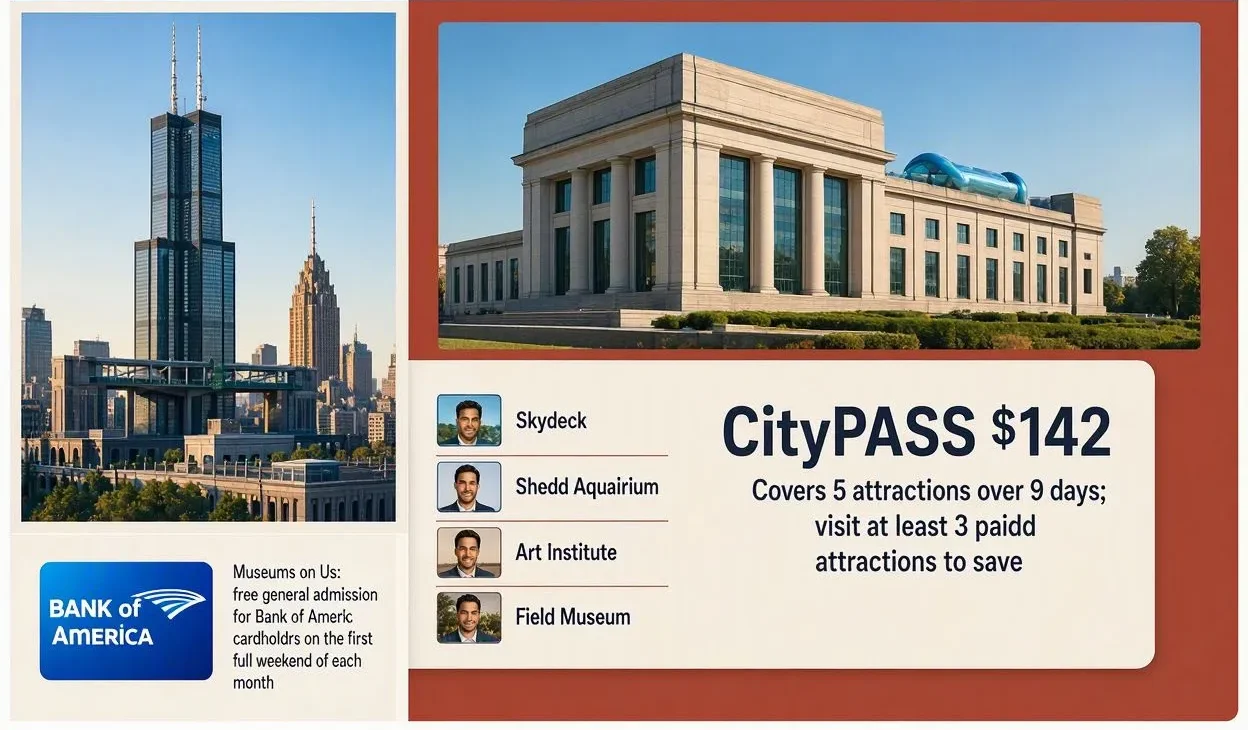
Buy a Chicago CityPASS for $142 if you plan to visit at least 3 paid attractions. The pass covers 5 attractions over 9 days, including Skydeck and Shedd Aquarium, with the remaining picks chosen from a list that includes the Art Institute and the Field Museum. Bank of America cardholders get free general admission at participating museums on the first full weekend of each month through the Museums on Us program.
A 3-Day Chicago Itinerary for First-Time Visitors
Spend day 1 downtown, day 2 on the lakefront and day 3 in the neighborhoods.
| Day | Morning | Afternoon | Evening |
| Day 1: Loop | Architecture river cruise | Millennium Park and the Art Institute | Deep dish dinner, Riverwalk at sunset |
| Day 2: Lakefront | Field Museum or Shedd Aquarium | Adler skyline view, then Skydeck | Live blues at Buddy Guy’s Legends |
| Day 3: Neighborhoods | Obama Presidential Center and MSI | Pilsen murals and the National Museum of Mexican Art | Italian beef on Taylor Street, then The Second City |
Final Thoughts on Planning Your Chicago Trip
The must-see things to do in Chicago start downtown, but the trip gets memorable once you leave the Loop. Book Skydeck and the Obama Presidential Center in advance. Leave everything else flexible. A morning river cruise and a late set at a blues club will show you more of the city than any checklist, and you’ll still have reasons to come back. Next big-city trip? Start with the best things to do in San Diego.